 English English

Views: 0 Author: Site Editor Publish Time: 2026-11-23 Origin: Site


A flat panel lamination machine bonds decorative films or surface materials to rigid substrates through controlled adhesive application and pressure.
Consistent bonding depends on substrate preparation, adhesive compatibility, coating uniformity, roller alignment, and curing conditions.
This guide explains how manufacturers can improve lamination quality and reduce production defects.
Table of Contents
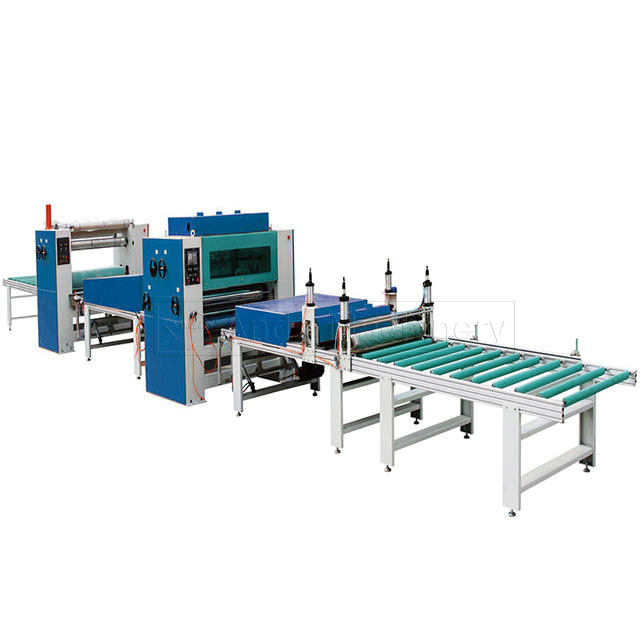
Flat panel lamination combines a rigid board with a decorative or functional surface layer.
The process depends on the adhesive system and equipment configuration.
Compatible applications may include PVC foam board, MDF, particleboard, and other prepared rigid panels.
The decorative material may be PVC film or another laminate suitable for the adhesive system.
Not every film is compatible with every substrate.
Surface energy, thickness, coating condition, and adhesive chemistry all affect bonding.
A flat lamination line may contain:
Substrate feeding and cleaning
Adhesive application
Film unwinding and tension control
Pressure rollers
Heating or conditioning equipment
Cutting and stacking
Anda Machinery offers a PVC flat lamination machine for compatible board materials.
Water-based and reactive PUR systems have different processing requirements.
Cold-glue applications may require appropriate drying or setting conditions.
Reactive PUR hot melts depend on suitable application temperature, contact pressure, and moisture-related curing.
Machine settings should follow the adhesive supplier's technical instructions.
Adhesive coating must be controlled before the film reaches the pressure rollers.
Insufficient or uneven adhesive can create weak bonding.
Coat weight describes how much adhesive is applied per unit area.
Adhesive consumption (kg) = Coating area (m²) × Coat weight (g/m²) ÷ 1,000
For example, a hypothetical process applying 50 g/m² over 1,000 m² consumes 50 kg of adhesive.
Actual application rates depend on the adhesive and substrate.
Uneven coating may create localized weak bonds.
Possible causes include damaged rollers, inconsistent gaps, substrate unevenness, or adhesive viscosity changes.
Check coverage across the full panel width.
Adhesive viscosity affects application and wetting behavior.
Excessively high viscosity can reduce coating uniformity.
Unsuitable temperatures may affect application or curing.
Use the adhesive manufacturer's specified processing range.
Dust, oil, moisture, and weak surface layers can interfere with bonding.
Clean the substrate before adhesive application.
Some materials may require additional surface preparation.
For a related decorative finishing application, see the PVC foam board flat PUR laminating machine.
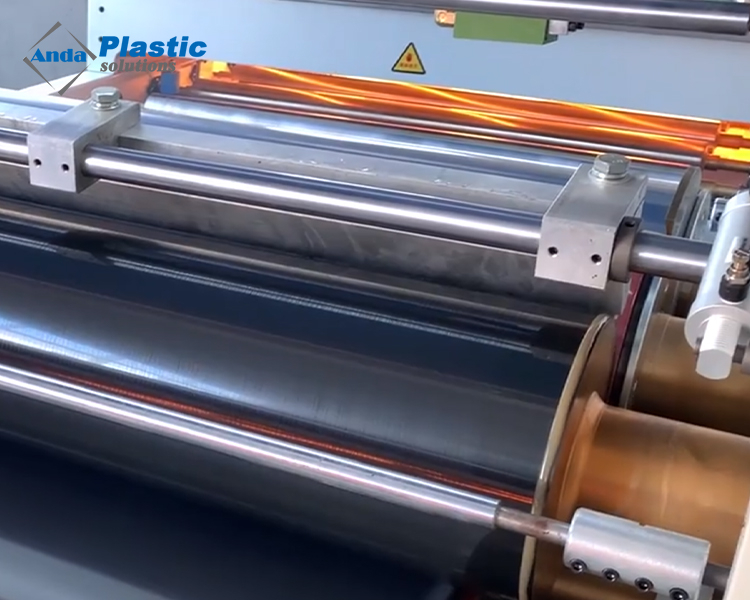
Pressure helps establish contact between the film, adhesive, and substrate.
However, excessive pressure is not always beneficial.
Uneven roller pressure can create different bonding conditions across the panel.
Check roller alignment, mechanical condition, and pressure distribution.
Excessive pressure may squeeze adhesive away from the bond interface.
It can also deform soft or compressible substrates.
The correct pressure depends on the adhesive, roller design, and material combination.
Low contact pressure may prevent the film from wetting the adhesive-coated surface properly.
This can contribute to bubbles, weak bonding, or partial delamination.
Excessive film tension may stretch decorative materials.
Insufficient tension may create wrinkles.
Film tension should remain stable throughout the production run.
Defect patterns provide useful information about the lamination process.
Defect | Potential cause | Recommended check |
|---|---|---|
Air bubbles | Trapped air, poor wetting | Roller contact and application |
Edge lifting | Incomplete bonding at edges | Adhesive coverage and edge pressure |
Wrinkles | Incorrect film tension | Unwinding and guiding |
Local delamination | Contamination or insufficient adhesive | Surface preparation and coat weight |
Adhesive streaks | Coating irregularity | Application roller and viscosity |
Surface indentation | Excessive pressure | Roller settings and substrate condition |
An uneven bond may originate before the film reaches the pressure rollers.
Inspect adhesive distribution first.
If the adhesive layer is consistent, examine pressure, tension, and alignment.
Peel or adhesion testing should match the specific film, adhesive, and substrate combination.
The ASTM adhesive standards collection provides methods that may be relevant to selected bonding systems.
Do not apply one test method to every laminated panel without confirming its scope.
Some surface defects originate in the underlying board.
Warped panels or inconsistent thickness can affect roller contact.
For more background on decorative panel manufacturing, review the WPC louver panel production equipment.
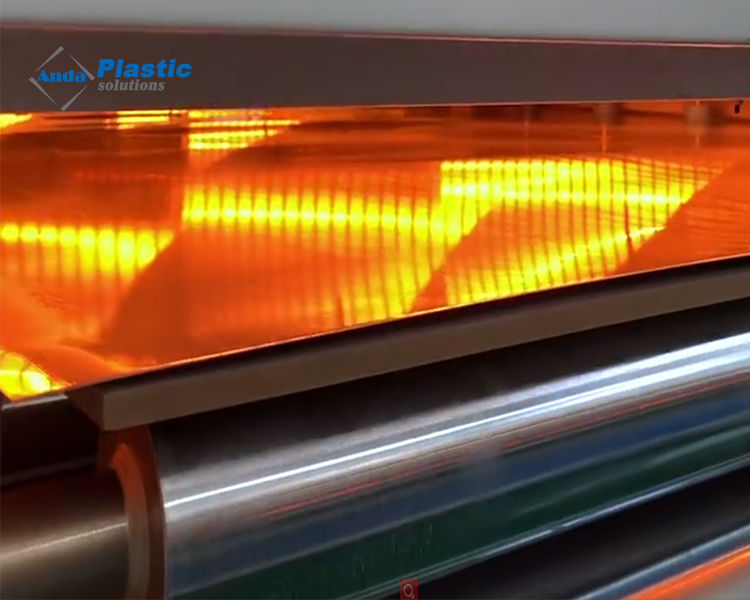
A good initial bond does not guarantee adequate final bond strength.
Some adhesive systems require additional time or controlled conditions.
Higher line speed reduces contact time at a fixed contact zone.
Insufficient contact or setting time may affect bonding.
However, slower operation cannot compensate for unsuitable adhesive or contamination.
Reactive PUR hot melts undergo additional curing after application.
The curing process depends on adhesive formulation and environmental conditions.
Follow the product's technical data sheet before performing final bond-strength testing.
Temperature and humidity can influence some adhesive systems.
Record workshop conditions when investigating inconsistent bonding.
The U.S. Environmental Protection Agency's industrial assessment guide discusses industrial coating and process improvement approaches.
A repeatable inspection process helps reduce defective panels.
Check board flatness, film condition, adhesive shelf life, and surface cleanliness.
Run a short trial before full production.
Inspect coverage, alignment, bubbles, and edge bonding.
Record coat weight, roller settings, film tension, line speed, and visible defects.
Test samples after the adhesive has reached the required conditioning or curing state.
The ASTM D618 conditioning practice provides general context for controlling plastic specimen conditioning, although it is not a specific lamination adhesion test.
Tip: Keep a reference panel from each approved production setting. It makes later quality comparisons easier.
Production efficiency should reflect acceptable finished output.
Measure actual adhesive consumption against the approved coat weight.
Excess adhesive increases costs and may contribute to surface irregularities.
Stable tension and alignment help reduce wrinkles and edge trimming losses.
Lamination quality depends partly on the consistency of incoming panels.
For example, PVC marble sheet production equipment can incorporate surface finishing as part of a broader manufacturing process.
Factories should coordinate panel inspection with finishing operations.
Maintain separate recipes for each substrate, film, and adhesive combination.
Record operating conditions and final inspection results.
This helps operators restore successful settings when switching products.
Flat panel lamination machine performance depends on adhesive compatibility, uniform coating, accurate roller pressure, and stable film handling.
Careful substrate preparation and controlled curing improve bonding reliability.
Anda Machinery provides flat panel lamination and surface finishing equipment for compatible board materials. Matching the lamination process to the substrate and adhesive system helps manufacturers improve finished panel quality.
Trapped air, poor adhesive wetting, contamination, or insufficient roller contact may cause bubbles.
Proper pressure improves contact. Excessive or uneven pressure can create defects.
No. Compatibility depends on adhesive chemistry and material properties.
Possible causes include poor edge coverage, contamination, or insufficient contact pressure.
Use an appropriate adhesion or peel test after the required curing period.


