 English English
Views: 0 Author: Site Editor Publish Time: 2026-01-30 Origin: Site


Have you ever wondered how plastic pipes, sheets, or even profiles are made in mass production? The answer lies in a plastic extruder machine. This essential piece of equipment is used to melt raw plastic and shape it into continuous forms. In industries ranging from construction to packaging, plastic extruders play a critical role in creating a wide variety of products.
In this article, we will explore the mechanics of a plastic extruder and its diverse applications. You'll learn how this machine powers the production of high-quality plastic goods efficiently.
A plastic extruder machine is an essential tool for processing plastic materials, allowing them to be transformed into various continuous shapes. These machines are widely used in industries that require large volumes of high-quality plastic products like pipes, films, sheets, and profiles.
The operation of a plastic extruder involves several key stages, including feeding, heating, mixing, and shaping the plastic. Here's a breakdown of how the machine works and the key components involved in the extrusion process.
Step | Description |
Feeding | Plastic pellets are loaded into the hopper, which feeds the material into the barrel. |
Heating and Mixing | The material is heated in the barrel by a rotating screw, which melts and mixes the plastic. |
Extrusion Through the Die | The molten plastic is forced through a die, which shapes it into the desired form (e.g., pipes, sheets, etc.). |
Cooling and Solidifying | After extrusion, the plastic is cooled and solidified to maintain the desired shape. |
The extrusion process ensures that the plastic products are created with consistent quality and precise dimensions, which is crucial for mass production in various industries.
Plastic extruders are categorized based on their screw configuration. The most common types are single-screw and twin-screw extruders, each suited for different applications and materials.
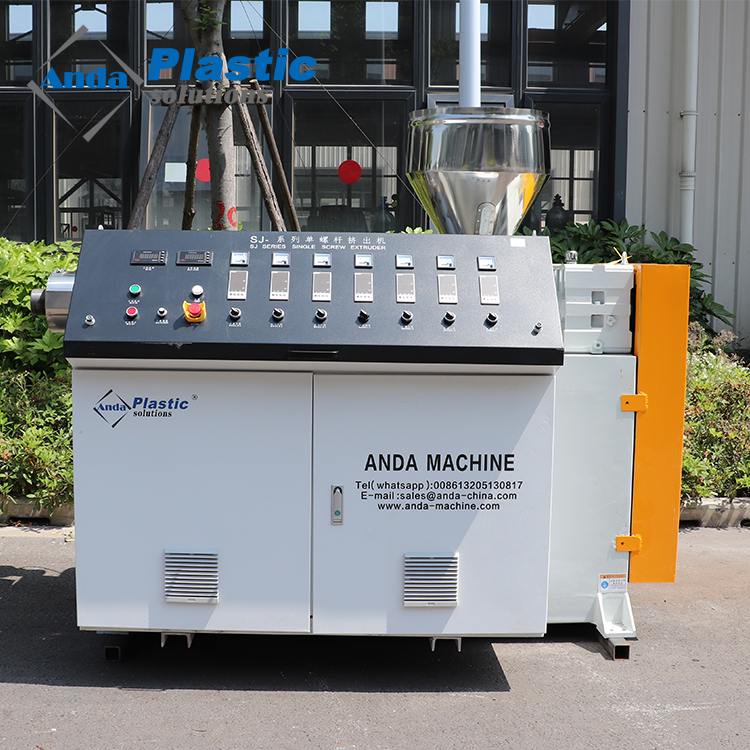
Component | Function |
Hopper | Feeds raw plastic into the barrel |
Barrel | Heats and mixes the plastic |
Screw | Moves, mixes, and melts plastic |
Die | Shapes the molten plastic |
Cooling | Solidifies the extruded product |
The hopper is where raw plastic pellets are loaded into the extruder machine. It feeds the material into the barrel, ensuring a steady and regulated flow. Many hoppers are equipped with sensors to monitor the material level, avoiding overfeeding or underfeeding that could disrupt the extrusion process.
Consistency in feeding is vital for the extruder’s function, as improper feeding can result in uneven melts or blockages. Therefore, ensuring a stable material supply from the hopper is crucial for maintaining the machine's efficiency.
The barrel is where the raw plastic is melted and mixed. It is a long, cylindrical chamber surrounded by heating elements. These elements heat the plastic to its melting point, while the screw inside the barrel moves the material along the length of the barrel.
The barrel is divided into multiple zones, with each zone having different temperatures. The first zone is cooler to prevent premature melting, while the last zone has a higher temperature to fully melt the plastic. The barrel's design and temperature control play a critical role in the quality of the final product.
The screw is the component that moves plastic through the extruder. It consists of a long shaft with helical flights, or threads, that push the plastic material through the barrel. The screw's design, including its pitch and depth, influences the flow rate and pressure inside the barrel.
The screw not only transports the material but also serves as a mixer, kneading the plastic to ensure it melts evenly. It also helps in the uniform distribution of any additives or colorants. The rotation of the screw generates friction, which aids in the melting process.
The die is the mold through which the molten plastic is forced to take its final shape. Dies come in various configurations, depending on the product being made. For example, a circular die is used for making pipes, while a flat die is used for sheets and films.
The design of the die determines the final dimensions and profile of the extruded product. Custom dies are often used for producing specialized or unique shapes, and the precision of the die affects the quality and consistency of the final output.
Once the plastic has been shaped by the die, it must be cooled to maintain its form. Cooling systems, such as water baths or air cooling units, are used to solidify the plastic and ensure it retains the desired shape and strength.
Cooling is a critical stage in the extrusion process. If cooling is too slow or uneven, it can lead to defects in the product. Effective cooling systems ensure that the plastic cools uniformly and quickly, maintaining the integrity of the final product.
Single-screw extruders are the most common type in the industry. They consist of a single screw inside the barrel, which moves the plastic through the machine. This simple and cost-effective design is suitable for a wide range of plastic materials, including polyethylene and polypropylene.
Single-screw extruders are ideal for producing products like pipes, films, and profiles. However, their mixing capabilities are limited compared to other types of extruders, making them less suitable for applications requiring complex mixing of materials.
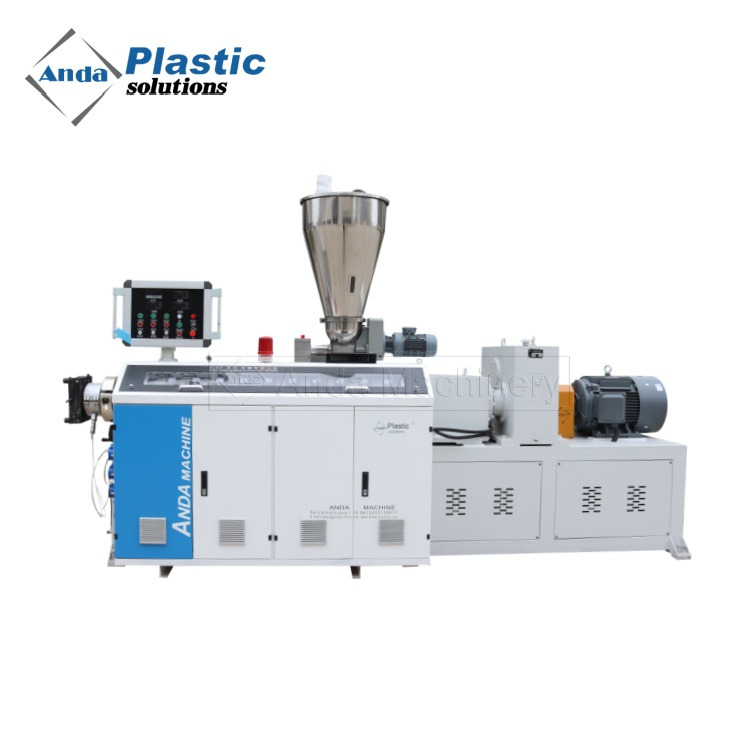
Twin-screw extruders feature two parallel screws that rotate inside the barrel, either in the same or opposite directions. These extruders are known for their superior mixing and compounding abilities, making them ideal for processing materials that require high precision and consistency.
Co-rotating twin-screw extruders are commonly used for engineering plastics, while counter-rotating versions are better for handling higher pressures. Twin-screw extruders are often used for applications that involve devolatilization or reactive extrusion.
In addition to single- and twin-screw extruders, there are specialized multiple-screw extruders. These machines feature three or more screws, offering even more efficient mixing and higher output rates.
Multiple-screw extruders are used in applications that require intensive mixing or high-volume production, such as the production of filled plastics or highly complex profiles.
Extruder Type | Screw Configuration | Key Application | Mixing Capability | Material Suitability |
Single-Screw Extruder | One rotating screw | Pipes, films, profiles | Limited | Polyethylene, polypropylene, general plastics |
Twin-Screw Extruder | Two parallel screws (co-rotating or counter-rotating) | Engineering plastics, reactive extrusion | High | Engineering plastics, PVC, nylons, etc. |
Specialized Extruders | Three or more screws | High-volume production, filled plastics | Very High | Complex profiles, filled materials, high output |
The extrusion process begins with the raw material, typically plastic pellets, entering the hopper. The material is then fed into the barrel, where the screw begins to move it forward. The hopper must be well-regulated to ensure a steady and consistent flow of material into the extruder.
As the plastic moves through the barrel, the heat from the surrounding elements and the friction from the rotating screw melt the material. The plastic is also mixed to ensure uniform melting and the even distribution of any additives or colorants.
The melting and mixing process is essential for creating high-quality, uniform plastic products. If the plastic is not melted properly, it can result in defects such as air bubbles or weak spots.
Once the plastic is fully melted and mixed, it is forced through the die. The die shapes the molten plastic into the desired form, whether that be a pipe, sheet, or film. The design of the die ensures that the plastic maintains a consistent shape and size as it is extruded.
After the plastic exits the die, it is cooled using either water baths or air cooling. The cooling process solidifies the plastic and helps it maintain its final shape. Proper cooling is crucial to ensure that the product does not warp or shrink as it cools.
Plastic extruders are commonly used to manufacture pipes and tubes, which are essential in industries like construction, plumbing, and agriculture. The extrusion process allows for the efficient production of long lengths of pipe with consistent thickness and strength.
Plastic films and sheets are produced in high volumes using plastic extruders. These materials are widely used in packaging, agriculture (e.g., greenhouse films), and medical applications (e.g., sterile packaging).
Extruders can also create custom profiles and rods, which are used in construction, automotive, and furniture industries. These profiles can be designed to fit specific applications, such as window frames, moldings, and decorative trims.
Plastic extruders are also used to process recycled materials into new products. Recycled plastic is often fed into the machine, where it is melted and reformed into new pellets or products. This contributes to sustainability efforts and reduces the demand for virgin plastic materials.
Application | Key Uses |
Pipes and Tubes | Construction, plumbing, agriculture |
Films and Sheets | Packaging, agriculture, medical |
Profiles and Rods | Construction, automotive, furniture |
Recycled Plastic Products | Sustainability, reducing virgin plastic demand |
Advantage | Description |
Speed and Efficiency | Plastic extruders offer high-speed production with minimal downtime. |
Versatility | They can create a wide range of products, from pipes to films, to profiles. |
Minimal Waste | Extrusion produces little waste, improving overall material efficiency. |
Plastic extruders offer fast production speeds and the ability to create large quantities of products in a short period. Their continuous nature allows for higher throughput compared to batch manufacturing processes, which is ideal for industries that require large volumes of products.
As the demand for more sustainable manufacturing practices grows, energy-efficient extruders are becoming more important. Technologies such as induction heating and energy-efficient motors help reduce the overall energy consumption of extrusion machines.
Automation and AI-powered systems are playing an increasing role in the extrusion process. These systems help monitor and adjust the machine’s settings in real-time, improving product quality and production efficiency.
The plastic extrusion industry is moving toward more sustainable practices, including the use of recycled plastics and energy-efficient machines. Companies like Anda are leading the way by providing energy-efficient solutions for plastic extrusion machines and promoting sustainable manufacturing practices.
Plastic extruders are essential in modern manufacturing, offering versatility, speed, and minimal waste. They are used to produce a wide range of plastic products, including pipes, films, and profiles. Increasingly, these machines are also used for recycling applications. As the industry progresses, energy-efficient and automated extruders are gaining traction, helping manufacturers boost productivity and sustainability. Zhangjiagang Anda Machinery Co., Ltd. stands out by providing environmentally-friendly solutions, leading the way in the plastic extrusion machine industry and shaping the future of plastic manufacturing.
A: A plastic extruder machine is an industrial device used to melt and shape raw plastic materials into continuous forms. It works by feeding plastic pellets into a heated barrel, where a rotating screw melts and mixes the plastic before forcing it through a mold, or die.
A: A plastic extruder works by heating raw plastic in a barrel, where it is moved by a rotating screw. The molten plastic is then pushed through a die to form the desired shape, such as pipes, films, or profiles.
A: The main advantages of using a plastic extruder include high production efficiency, the ability to create consistent products, and minimal waste. Plastic extruders also allow for the mass production of various plastic products.
A: Plastic extruders are essential for efficiently producing a wide range of plastic products used in various industries. They enable mass production with consistent quality, making them crucial for applications such as pipes, films, and profiles.
A: The cost of a plastic extruder machine can vary depending on the type, size, and capabilities. Generally, a basic single-screw extruder can be more affordable, while advanced twin-screw and specialized extruders can be more expensive due to their higher precision and capabilities.


