 English English
Views: 0 Author: Site Editor Publish Time: 2026-05-18 Origin: Site


Procuring a new panel extrusion line represents a massive capital investment for any factory. Manufacturing investors and production engineers face intense pressure to get this decision right. The difference between a highly profitable operation and a costly bottleneck goes far beyond the initial hardware sticker price. Long-term success relies heavily on equipment stability. It also depends on automation reliability and precise chemical formulation support. Without these elements working in harmony, you risk producing unsellable scrap.
This guide delivers an objective, evidence-based framework for evaluating your next equipment purchase. You will discover exactly how to balance mechanical precision and turnkey vendor requirements. Let us explore what separates entry-level setups from world-class manufacturing lines. By understanding these technical nuances, you can confidently secure a machine capable of consistent, high-yield production.
A high-performance extrusion line must balance hardware precision with formula compatibility—industry consensus is that successful production is "40% machine hardware and 60% chemical formulation."
Machine selection depends heavily on the end-product: Celuka (crust) foaming machines are required for hard-surface furniture boards, while free-foam setups suit lighter signage.
The optimal WPC foam board requires only 5-10% wood powder to achieve superior screw-holding strength; machines must be calibrated to handle this specific ratio without compromising the closed-cell foam structure.
Before selecting hardware, you must clearly define your intended end-product. Many buyers confuse foam board machines with heavy decking profile lines. They serve entirely different purposes. A true foam board formula uses only 5% to 10% wood powder. This specific ratio maintains the internal foaming integrity. It also significantly boosts the screw-holding capacity. Decking profiles use a massive 50% to 65% wood powder ratio. Those heavy profiles require entirely different screw designs, torques, and cooling systems.
Your target market also dictates the specific foaming technology you need. You must choose between two primary extrusion methods:
Celuka (Crust) Technology: This method uses a specialized die and calibration unit to cool the board surface instantly. The rapid cooling creates a hard, scratch-resistant outer shell. Cabinet makers and furniture manufacturers demand this robust surface finish.
Free-Foam Technology: Here, the polymer melt expands freely after leaving the die. This process yields a very uniform internal density but leaves a softer exterior surface. These boards work perfectly for lightweight advertising signage and display panels.
You should also evaluate co-extrusion capabilities. Advanced setups support ABA or ABC co-extrusion layers. This technology allows you to produce premium "capped" boards. Capped boards feature an ultra-durable outer layer offering high stain and weather resistance. Adding this capability opens doors to higher-margin architectural markets.
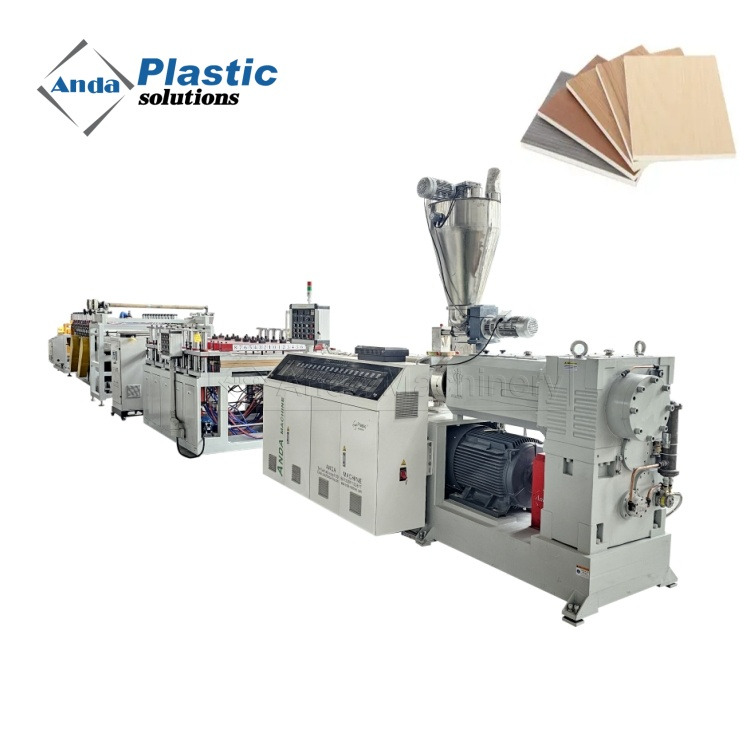
The mechanical core dictates your daily production stability. Sourcing a reliable WPC Board & Foam Board Machine requires scrutinizing several specific components. Substandard parts inevitably lead to uneven output and material waste.
The extruder serves as the heart of the entire line. You need robust screw designs to handle heavy daily workloads. Industry-standard models like the 80/156 or 92/188 provide the high torque required for processing PVC/PE resin and wood powder mixtures. The gearbox must withstand continuous high-pressure operation without overheating or failing.
This component ensures uniform melt distribution across the entire board width. A substandard die leads directly to uneven board thickness. Uneven thickness creates excessive raw material waste and immediate quality control failures. Look for dies machined from premium forged steel. They must feature highly polished internal flow channels.
Your cooling system determines the final dimensional stability of the board. The industry standard for quality boards demands a density tolerance between 0.4 and 0.8 g/cm³. Inadequate cooling length causes severe issues. Unstable vacuum pressure directly causes board warping and surface roughness. Ensure the calibration table offers sufficient length and high-efficiency water flow.
Evaluate the quality of the haul-off unit carefully. Traction speed stability prevents board stretching or jamming. Cutting saws must offer dust-free, synchronized operation. Finally, automated stacking systems require reliable PLC controls. Always look for globally recognized electrical components from brands like Siemens, Omron, ABB, or Schneider.
Component | Entry-Level Risk | High-End Standard |
|---|---|---|
Twin-Screw Extruder | Low torque capacity; rapid screw wear. | 80/156 or 92/188 models; hardened alloy screws. |
T-Die | Poor polishing; uneven melt flow. | Forged steel; precise internal distribution channels. |
Vacuum Calibration | Short table length; weak vacuum pumps. | Extended cooling zones; strict 0.4–0.8 g/cm³ density control. |
Electrical Controls | Generic PLCs; frequent electrical faults. | Siemens, Omron, ABB, or Schneider integration. |
Even the most expensive hardware will produce pure scrap if the chemical mix fails. The hardware-chemical dependency remains the most overlooked aspect of extrusion manufacturing. Successful production relies heavily on the formulation. Experts widely agree on the "40% machine, 60% formula" rule.
You must carefully evaluate vendor expertise beyond mechanical engineering. Shortlist manufacturers offering proven formulation technology alongside the hardware. Turnkey solutions bridge the critical gap between raw materials and finished products. Your vendor should provide detailed guidance on several key formula variables.
Proper PVC Resin Selection: The foundation of your board requires the correct polymer. Vendors should recommend specific resin grades, typically those featuring a K-value of 57-58.
Balancing Foaming Agents: Achieving the perfect cellular structure requires balancing exothermic AC agents and endothermic NC agents. This delicate balance controls the expansion rate.
Foaming Regulators: These vital additives improve melt strength. They prevent cell collapse during the rapid cooling phase, ensuring a uniform internal density.
Calcium Carbonate Ratios: Adding calcium carbonate reduces overall material costs. However, precise ratios remain crucial to avoid compromising the board's structural rigidity and flexibility.
Securing a machine supplier who shares this chemical knowledge prevents months of costly trial and error.
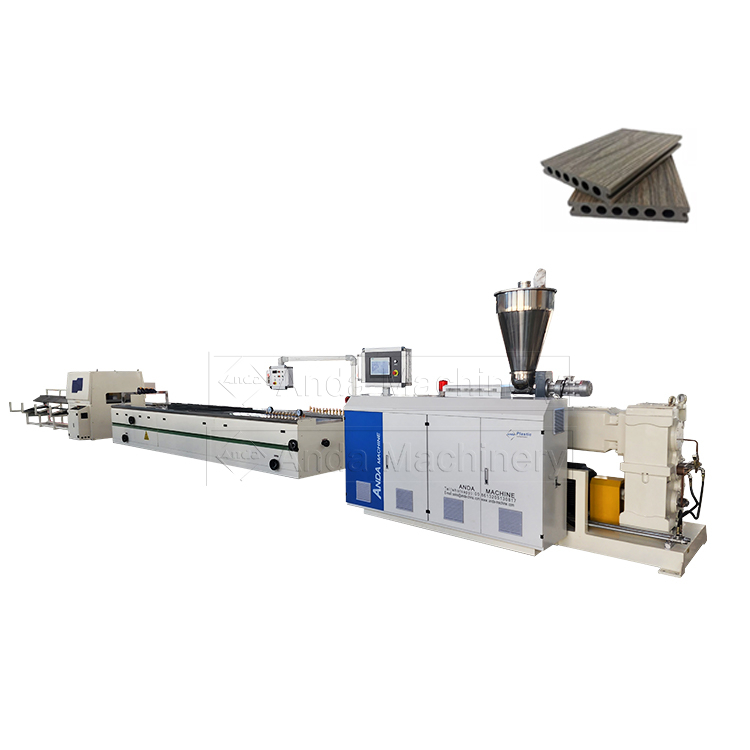
Anticipate operational failures before you finalize any equipment purchase. Smart buyers use business framing techniques during vendor negotiations. Ask suppliers exactly how their equipment solves typical extrusion defects. This line of questioning quickly reveals true engineering expertise.
Poor surface quality usually results from inadequate mixing, poor plastification, or fluctuating extruder temperatures. If the polymer melt experiences uneven heating, it extrudes poorly.
Evaluation check: Ask the vendor about the temperature control precision of the barrel heating zones. Demand exact thermal tolerance specifications.
Inconsistent die pressure or erratic haul-off speeds cause thickness variations across the board. If the traction motors slip or surge, the board profile warps immediately.
Evaluation check: Inspect the structural rigidity of the T-die. Verify the exact synchronization mechanisms governing the traction motors.
Insufficient cooling primarily causes post-extrusion warping. If the core remains hot while the outer shell cools, internal stress bends the board.
Evaluation check: Verify the total length of the vacuum calibration table. Ask for data regarding water-flow efficiency and vacuum pump capacity.
Production Defect | Primary Technical Cause | Procurement Evaluation Check |
|---|---|---|
Surface Roughness | Inadequate plastification; temperature fluctuation. | Check precision of barrel heating zones. |
Uneven Thickness | Inconsistent die pressure; erratic traction. | Inspect T-die rigidity and haul-off motor sync. |
Board Deformation | Insufficient cooling; internal thermal stress. | Verify calibration table length and water flow. |
Evaluating production capacity against energy consumption helps you shortlist the best vendors. Compare machines based on clear output tiers. Look closely at setups offering 300–500 kg/h versus higher-capacity 500–800 kg/h models. Cross-reference these output figures against their stated kilowatt power requirements. High output means nothing if the machine consumes excessive, unprofitable electricity.
Trustworthy manufacturers provide transparent Standard Operating Procedures (SOPs). A reliable one-stop service typically follows a strict procurement loop. It begins with a Customized Drawing. Next comes the Formal Quotation, followed by the Purchase Agreement. After Production, you must conduct Factory Acceptance Testing (FAT). Finally, the vendor handles Delivery. Refuse vendors skipping the FAT phase; it represents your only chance to verify performance before shipping.
Overseas installation and commissioning remain non-negotiable requirements. Ensure the vendor legally commits to dispatching technical engineers to your facility. These engineers must handle on-site assembly, formula testing, and comprehensive operator training. Do not accept remote video support as a substitute for initial commissioning.
Finally, scrutinize the warranty terms and spare parts availability. High-wear items need accessible, fast replacement channels. Extruder screws handling abrasive wood powder inevitably degrade. You need guarantees regarding gearbox lifespans, motor warranties, and swift replacement part delivery.
Investing in a modern extrusion line requires looking far past the initial quotation document. The most reliable manufacturing setups are fully integrated, turnkey solutions. Hardware engineering must perfectly align with chemical formulation expertise. Buying a machine without securing the corresponding chemical recipe invites operational disaster.
Your next steps should focus on drafting a highly specific Request for Quotation (RFQ). Demand exact details regarding T-die origins and construction materials. Ask vendors to list their PLC brand names explicitly. Request the exact lengths of their cooling tables. Most importantly, secure a formal formula-sharing agreement before signing any contracts. Taking these deliberate actions ensures you procure a machine capable of delivering consistent, high-quality board production for years.
A: A high-quality machine should consistently produce boards featuring a density between 0.4 and 0.9 g/cm³. The exact target depends heavily on your specific application. Furniture boards require higher densities for strength, while advertising panels utilize lighter densities.
A: Yes, WPC foam boards are a specific variation of PVC foam boards. However, the machine's screw design and motor must possess sufficient robustness. They must handle the added friction and torque caused by the 5-10% wood powder addition.
A: Commercial-grade lines typically output between 300 kg/h to 800 kg/h. The exact production figure depends entirely on your chosen extruder model, such as an 80/156 versus a 92/188 setup, and the board thickness.
A: Celuka technology cools the surface of the board immediately upon exiting the die. This rapid cooling creates a hard, smooth, and moisture-resistant crust. It provides the excellent structural integrity and paint-ready surface required by modern cabinet makers.


