 English English
Views: 0 Author: Site Editor Publish Time: 2026-07-22 Origin: Site


Table of Contents
A new fence is a high-stakes property investment that directly impacts home security, curb appeal, and long-term maintenance budgets. Homeowners are often forced to choose between the traditional aesthetic of wood and the modern engineering of pvc fence panels, but marketing claims frequently obscure the true long-term costs, climate vulnerabilities, and repair realities of both materials. This guide provides an objective, head-to-head evaluation of wood and PVC fencing, analyzing environmental resilience and installation risks to help you finalize your material choice.
Long-Term Expenses: Wood has a lower upfront cost but incurs compounding maintenance expenses; PVC fence panels require a higher initial investment but offer a significantly lower 10-year cost.
Climate Dependency: Wood is highly susceptible to rot and insect damage in humid environments, whereas PVC requires specific UV inhibitors to prevent brittleness in high-sun or extreme cold climates.
Repair Realities: Wood fences allow for cheap, single-picket replacements, while repairing damage to PVC often requires replacing entire structural panels.
Aesthetic Flexibility: Wood can be painted, stained, and easily modified over time; PVC fence panels lock you into a permanent color and style.
Before digging a single post hole, you need to establish exactly what this barrier must achieve. Evaluate whether your primary goal is absolute privacy from neighbors, structural security for large dogs, property value enhancement, or strict compliance with Homeowner Association (HOA) guidelines. Many HOAs dictate specific heights, approved materials, and exact color palettes. Installing a barrier that violates these covenants usually results in forced removal and fines.
Regional climate realities dictate material survival rates. You must assess local environmental stressors. Freeze-thaw cycles push posts out of the ground. High wind zones require deeper footings and stronger rails. Coastal salt-air exposure corrodes standard fasteners rapidly. Ambient humidity accelerates fungal growth on organic materials. You need to match the material to the specific weather patterns of your zip code.
Define your maintenance tolerance honestly. Natural materials demand manual labor. You will spend weekends power washing, scraping, and applying sealants. Synthetic materials require periodic passive maintenance, usually just a quick wash with a hose. Decide if you want a weekend project every few years or a hands-off installation.
Future homebuyers look closely at boundary lines. Natural wood carries a high perceived value for its warmth and character, but buyers also see the maintenance warning signs if the boards look weathered. Modern pvc fence panels offer zero-maintenance appeal. Many buyers prefer the permanent, clean look of synthetic boundaries because they know they won't have to spend their own weekends repairing them.
Check your property survey to confirm exact boundary lines.
Review HOA bylaws for material and height restrictions.
Test your soil drainage to anticipate post rot risks.
Calculate your local frost line depth for footing requirements.

Wood fencing varies wildly in quality and longevity based on the species you select. Pressure-treated pine is the most common budget-friendly option. Mills inject pine with chemical preservatives to resist insects and fungal decay. However, pine is highly unstable. It warps, twists, and shrinks aggressively as it dries in the sun. Cedar is a mid-tier, naturally rot-resistant option. It contains natural oils that repel insects without harsh chemicals, and it stays much flatter than pine. Redwood offers premium durability and exceptional dimensional stability, but it requires a massive upfront investment.
Wood Species | Rot Resistance | Dimensional Stability | Expected Lifespan |
|---|---|---|---|
Pressure-Treated Pine | Moderate (Chemical) | Low (Prone to warping) | 10 - 15 Years |
Western Red Cedar | High (Natural Oils) | High (Stays flat) | 15 - 20 Years |
Redwood | Very High | Very High | 20 - 25+ Years |
Realistic lifespan expectations depend heavily on soil contact. If you bury untreated wood directly in damp soil, it will rot at the ground line within five years. Proper installation requires setting posts in concrete domed above the soil grade to shed water away from the end grain.
Wood requires a strict maintenance cadence. You must power wash the surface to remove dirt and mildew, scrape away any flaking debris, and reapply water-repellent sealants or UV-blocking stains. This cycle repeats every two to three years. When power washing, you must keep the pressure below 1500 PSI and use a wide-angle tip. High pressure will tear the wood fibers, leaving a fuzzy, splintered surface that traps moisture.
Without heavy pigmentation and UV-blocking stains, wood undergoes a natural aesthetic aging process. The boards transition to a rustic silver-gray patina. While some people like this weathered look, the lack of sealant allows water to soak deep into the grain. This constant wet-dry cycling causes the boards to crack and eventually leads to structural rotting.
Biological threats are relentless. Termites, carpenter ants, and fungal rot actively consume wood. Ground-contact posts in damp, shaded areas are highly vulnerable to mycelium growth. Once rot hollows out a post, the entire fence line becomes unstable and will likely blow over during the next major storm.
Pros: Lower initial material cost, classic natural aesthetic, easy to paint or stain, simple single-board repairs, biodegradable at end of life.
Cons: High lifetime maintenance demands, susceptible to warping and splintering, shorter overall lifespan in wet climates, vulnerable to insect damage.
Synthetic fencing performance depends entirely on the extrusion process. Virgin vinyl offers superior durability and consistent color. It flexes under impact and resists shattering. Recycled PVC often suffers from structural weakness and premature fading because the mixed plastics lack uniform tensile strength. High-quality manufacturers use a co-extrusion process, creating a strong inner core for impact resistance and a tough outer capstock layer for weather protection.
The outer layer must contain high levels of titanium dioxide (TiO2) and specific UV inhibitors. These additives prevent sun-induced degradation. Without them, the plastic will yellow, become chalky, and turn brittle under intense solar radiation. When shopping for pvc fence panels, you must verify the manufacturer uses adequate UV protection for your specific climate zone.
Synthetic barriers require passive maintenance. You only need to perform a semi-annual washing with a mild detergent to remove algae or mildew buildup. The non-porous surface stops moisture from penetrating, so rot is physically impossible.
The classic white vinyl challenge involves high visibility of stains. Green mold, red clay splash-back, and grass clippings stand out sharply against the white surface. You must use specific chemical washes, like vinegar-based solutions, to clean the panels without scratching the glossy outer shell. Never use abrasive scrubbing pads or harsh solvents. They will create micro-scratches that permanently dull the finish and trap dirt faster.
Structural rigidity varies by design. Routed systems feature horizontal rails that slide directly into pre-cut holes in the posts, locking into place. This creates a seamless, incredibly strong barrier. Bracketed systems rely on external metal or plastic hardware screwed into the posts. These brackets can loosen, rust, or break under heavy wind loads.
Pros: Impervious to moisture and insects, zero painting or staining required, exceptionally long lifespan (20-30+ years), consistent appearance.
Cons: Higher upfront material cost, limited color changes post-installation, potential for cracking under extreme impact or freezing temperatures.
High humidity and heavy rain heavily favor synthetic materials. PVC wins decisively in wet environments. Wood requires aggressive, perfect sealing to prevent rot in damp conditions. Even with premium sealants, constant moisture eventually penetrates the end-grain of timber, leading to decay.
Extreme heat and intense sun exposure affect both materials differently. Wood fades naturally, dries out, and splinters. Synthetic materials require high-grade UV protection to survive. Without premium capstock extrusion, the plastic warps or develops a chalky residue. High-quality vinyl, however, withstands desert heat exceptionally well.
Extreme cold introduces unique structural risks. Wood remains dimensionally stable in freezing temperatures. Lower-grade plastic can become highly brittle. A stray baseball, a heavy snowdrift, or a snowplow throwing ice can shatter a frozen plastic panel upon impact. Premium synthetic materials use impact modifiers to maintain flexibility in sub-zero climates.
Micro-climate failures happen regardless of material. High-velocity hail storms can puncture or fracture rigid plastic panels, leaving holes in the boundary. Meanwhile, high-moisture zones with heavy subterranean termite populations will destroy untreated pine posts within just a few years, hollowing out the structural supports from the inside.
Wood is a naturally renewable resource. Trees sequester carbon during their growth cycle, removing greenhouse gases from the atmosphere. Untreated timber is fully biodegradable at the end of its lifespan. However, the heavy chemical treatments required to preserve outdoor wood introduce toxins into the surrounding soil. Furthermore, the recurring application of petroleum-based stains and sealants negates many of the environmental benefits.
Synthetic production relies heavily on petroleum-based processes and energy-intensive manufacturing. The material is notoriously difficult to recycle at the end of its life. Most damaged panels end up in landfills where they will not decompose. However, during its operational lifespan, synthetic fencing requires zero toxic chemical sealants, stains, or paints, preventing chemical runoff into local groundwater.
Ground heaving affects all fence lines. Frost heave in northern climates or expansive clay soils in southern regions will inevitably push posts out of alignment. Wood is highly forgiving. If a gate binds or a rail sags due to ground shifting, you can shave the wood, adjust the hinges, or re-nail the rail with basic hand tools.
Rigid plastic systems require precise, perfectly level installation. If the ground shifts significantly, the interlocking rails can pop out of their routed post holes, compromising the entire section. Maintaining structural integrity demands meticulous site preparation. Deep concrete footings are absolutely necessary for synthetic posts. You must dig below the local frost line and pour bell-shaped footings to prevent wind-shear failure and combat frost heave. The hollow nature of synthetic posts requires a massive concrete anchor to remain stable.
Installation Factor | Wood Fencing | PVC Fencing |
|---|---|---|
Post Footings | Concrete or packed gravel | Deep concrete only (below frost line) |
Terrain Slopes | Easy to custom cut on site | Requires specialized racking panels |
Thermal Expansion | Minimal | High (Requires expansion gaps) |
Damage mitigation strategies differ drastically between the two materials. A broken wood picket is a minor inconvenience. You can purchase a single replacement board at any local lumberyard and install it in minutes with a hammer and galvanized nails. The repair blends in easily, especially if the fence is painted.
Repairing modern synthetic barriers involves much higher stakes. A lawnmower impact, a vehicle strike, or a fallen tree branch rarely breaks just one isolated piece. You often must order and install entirely new pvc fence panels. This process is subject to supply chain delays and freight shipping times. Furthermore, manufacturers frequently discontinue specific styles, extrusion profiles, or colors. Finding an exact match for a damaged section five years after the initial installation can be nearly impossible, sometimes forcing homeowners to replace entire fence lines.
Wood is highly forgiving for DIY enthusiasts. You can make custom cuts on-site to accommodate sloping terrain or odd property lines. If a measurement is slightly off, you can trim a board to fit perfectly. Traditional carpentry tools suffice. You only need a circular saw, a framing hammer, a tape measure, and a level.
Installing interlocking plastic systems demands specialized tooling and advanced layout skills. Professionals use fine-tooth vinyl-cutting blades, bracket jigs, post collar leveling kits, and specialized routing tools. Measurements must be exact to the quarter-inch. You must mathematically account for thermal expansion. If you cut a rail too tight and force it between two posts, the summer heat will cause the plastic to expand, buckling the entire section. Furthermore, many synthetic bottom rails require structural aluminum inserts to prevent sagging over time. Due to these unforgiving measurements and specialized techniques, professional installation is highly recommended for synthetic systems.
Set string lines to establish a perfectly straight boundary.
Mark post hole centers exactly on layout to match panel widths.
Dig holes below the frost line using a power auger.
Set posts in wet concrete, checking plumb on two adjacent sides.
Allow concrete to cure fully before inserting horizontal rails.
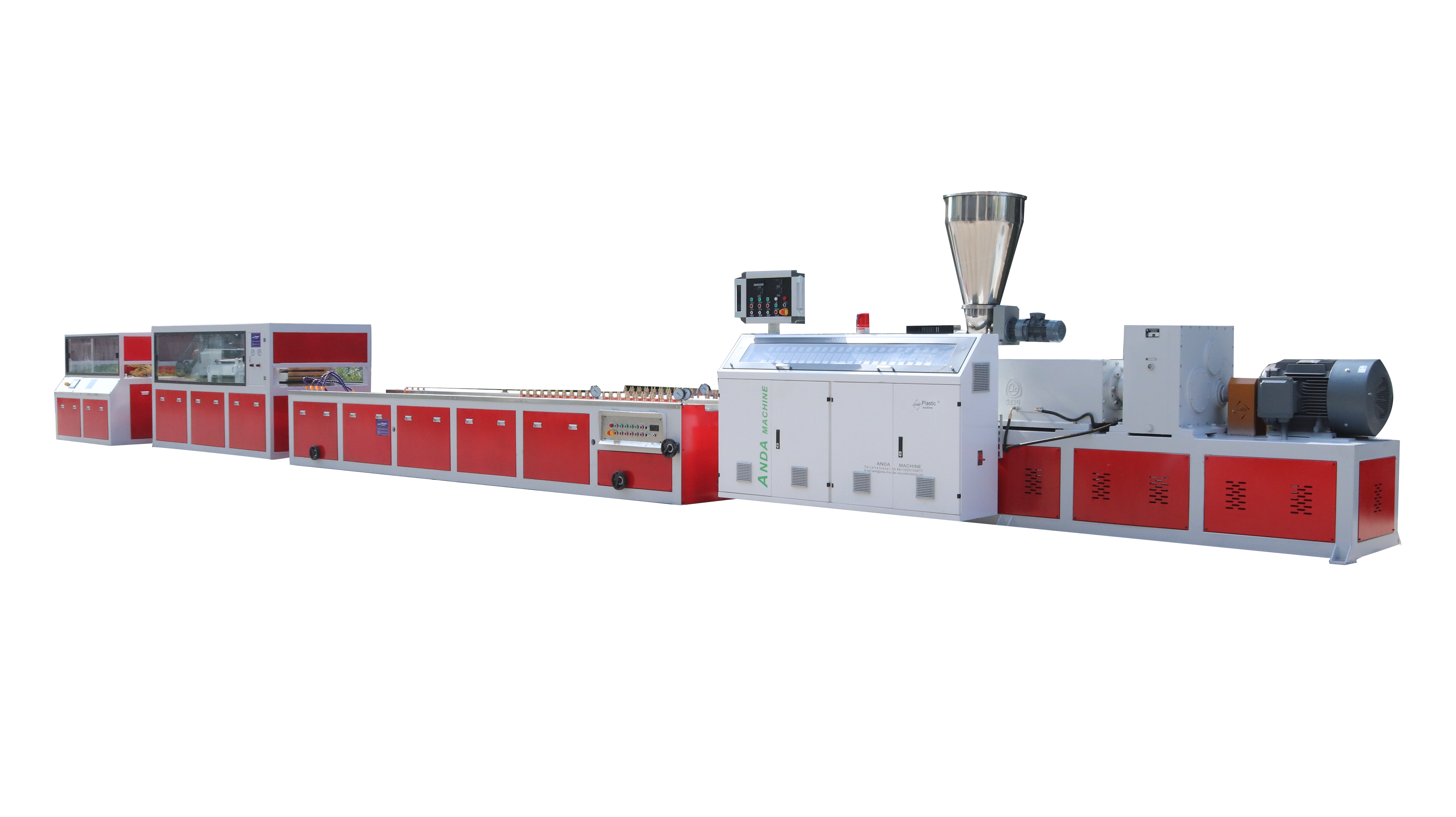
If you are planning to enter the PVC fencing industry or expand your existing production capacity, choosing a reliable production line is the key to manufacturing high-quality PVC fence panels efficiently. ANDA Machinery specializes in PVC Fence Panel Production Lines, providing complete turnkey extrusion solutions for manufacturers worldwide. From raw material mixing and extrusion to vacuum calibration, cooling, haul-off, cutting, and automatic stacking, every stage is engineered for stable production, consistent quality, and long-term reliability.
Complete Turnkey Production Solution – We provide the entire PVC fence panel manufacturing line, including material handling, extrusion, calibration, cutting, and auxiliary equipment, helping customers build an efficient production plant from the ground up.
Stable High-Output Extrusion Technology – Our optimized conical twin-screw extrusion system delivers consistent output, excellent plasticizing performance, smooth panel surfaces, and precise dimensions with reduced material waste.
Customized Production Line Configuration – Whether you manufacture privacy fence panels, picket fences, ranch fences, or decorative PVC fence profiles, ANDA can customize the production line to match your product specifications and capacity requirements.
Reliable Components & Intelligent Control – Premium motors, gearboxes, electrical components, and PLC control systems ensure stable operation, lower maintenance costs, and higher production efficiency.
One-Stop Technical Support – From factory layout design and machine installation to commissioning, operator training, formula guidance, and after-sales service, our experienced engineering team supports your project from start to finish.
Proven Global Experience – More than 1,000 extrusion lines have been supplied to customers worldwide, helping plastic manufacturers improve productivity, reduce operating costs, and produce consistent, high-quality PVC products.
Whether you are launching a new PVC fence panel manufacturing business or upgrading an existing production facility, ANDA's PVC Fence Panel Production Line provides a dependable, high-performance solution designed to maximize efficiency, product quality, and long-term return on investment.
Neither material holds a universal advantage for every property. Your final choice hinges entirely on regional climate stressors, aesthetic preferences, and your personal tolerance for ongoing physical maintenance. Natural timber offers classic beauty and easy repairability but demands relentless upkeep. Synthetic engineering provides decades of zero-maintenance privacy but requires precise installation and limits future color changes.
Review your local HOA covenants immediately to identify any strict material, height, or color restrictions before planning your layout.
Secure an official property line survey to guarantee your new posts sit entirely within your legal boundaries, preventing future neighbor disputes.
Contact your local utility marking service to locate underground gas, water, and electrical lines before digging any post holes.
Request itemized quotes from three local contractors for both materials to compare regional installation rates.
A: Wood typically costs less upfront for materials and installation. However, synthetic panels eliminate the recurring costs of stains, sealants, and replacement boards, making them more economical over a 15-year period.
A: High-quality synthetic materials typically last 20 to 30 years or more with minimal degradation. A well-maintained wood fence generally lasts 15 to 20 years, depending heavily on the wood species and soil moisture levels.
A: Painting synthetic materials is highly discouraged. The smooth, non-porous surface prevents standard exterior paints from adhering properly, leading to rapid peeling. Applying aftermarket paint almost always voids the manufacturer warranty.
A: Extreme freezing temperatures can cause lower-grade plastics to become brittle. While the fence will not crack on its own from the cold, it becomes highly susceptible to shattering if struck by a heavy object.
A: White surfaces easily show grass clippings and mud splash-back. However, they do not permanently stain easily because the material is non-porous. Clean them using a simple vinegar-based solution and a soft cloth.
A: Wind resistance depends heavily on installation quality. Solid synthetic panels catch more wind and require deeper concrete footings to prevent leaning. Semi-private wood designs allow wind to pass through, reducing structural load.
A: Wood is significantly easier to repair. You can replace a single damaged picket in minutes with basic hand tools. Damage to a synthetic system often requires removing and replacing entire structural sections.


