 English English

Views: 0 Author: Site Editor Publish Time: 2026-10-28 Origin: Site


Hot stamping and lamination are two common surface finishing methods for decorative panels. Hot stamping uses heat and pressure to transfer decorative layers from a carrier foil onto a substrate. Lamination bonds a continuous decorative film to the substrate using a compatible adhesive system.
The main difference is that hot stamping transfers a decorative coating, while lamination attaches a decorative film.
Both methods are used for PVC panels, WPC boards, door panels, wall panels, and other decorative building materials. However, their suitability depends on the required surface finish, substrate material, production process, and long-term performance expectations.
This guide compares hot stamping vs lamination in terms of working principles, durability, appearance, production efficiency, costs, and equipment requirements.
Table of Contents

Before examining each process, the following table summarizes the main differences.
Feature | Hot Stamping | Lamination |
|---|---|---|
Working principle | Transfers decorative layers with heat and pressure | Bonds decorative film to substrate |
Main material | Hot stamping foil | PVC, PET, PP, or compatible film |
Bonding method | Heat-activated transfer layer | Adhesive or pre-coated bonding system |
Carrier film | Removed after transfer | Decorative film remains on panel |
Temperature | Depends on foil and substrate | Depends on adhesive and film |
Surface finish | Wood grain, marble, metallic, solid colors | Wood grain, marble, matte, textured films |
Thickness | Typically a relatively thin transferred layer | Retains the thickness of the applied film |
Edge coverage | Depends on tooling and profile geometry | Can wrap edges with suitable equipment |
Production speed | Depends on transfer conditions | Depends on adhesive and application conditions |
Common defects | Incomplete transfer, peeling, pattern distortion | Bubbles, wrinkles, delamination |
Main applications | Decorative panels and compatible profiles | Flat panels, doors, furniture boards, profiles |
The key takeaway: Hot stamping is often suitable when manufacturers want a decorative transferred finish without retaining the full carrier film. Lamination is often preferred when a continuous decorative film, textured finish, or multi-surface coverage is required.
Hot stamping, also known as thermal foil transfer, applies decorative layers to a panel using controlled heat, pressure, and contact time.
A typical hot stamping foil includes a carrier film, release layer, decorative layer, and heat-activated bonding layer. Some formulations also contain protective coatings.
During processing, a heated roller presses the foil against the substrate. The decorative layers transfer to the panel, and the carrier film is separated.
A typical continuous hot stamping process involves five stages.
Step 1: Surface preparation
Clean the PVC, WPC, or other compatible panel surface. Remove dust, oil, and processing residues.
Step 2: Decorative foil feeding
Install the foil roll and adjust its alignment and tension.
Step 3: Heat and pressure application
The heated roller presses the foil against the panel. Temperature and pressure activate the transfer mechanism.
Step 4: Carrier film separation
The carrier film is removed according to the foil's release requirements, leaving the decorative layer on the panel.
Step 5: Cooling and inspection
Inspect pattern completeness, adhesion, gloss, and surface consistency.
Transfers decorative patterns without retaining the entire carrier film.
Supports various wood-grain, marble-effect, and metallic finishes.
Can be integrated into compatible continuous production systems.
Avoids a separate liquid adhesive application stage when using suitable transfer foils.
Can be applied to selected flat and profiled surfaces with appropriate tooling.
Hot stamping requires careful control of temperature, pressure, speed, and foil compatibility.
Incomplete transfer may occur if the roller does not contact the substrate uniformly.
Heat-sensitive substrates may deform when processing conditions are unsuitable.
The durability of the transferred finish also depends on its coating construction and intended application.
Lamination applies a continuous decorative film to a panel using a compatible bonding system.
Unlike hot stamping, the decorative film remains on the finished surface.
Common decorative film materials include PVC, PET, and PP. The selected film may provide wood-grain, marble, solid-color, matte, or textured finishes.
Step 1: Substrate preparation
Clean the panel and verify surface compatibility.
Step 2: Film preparation
Load the decorative film and adjust alignment and tension.
Step 3: Adhesive application
Apply the specified adhesive to the film or substrate, unless a compatible pre-coated film system is used.
Step 4: Film bonding
Pressure rollers bond the decorative film to the panel surface.
Step 5: Stabilization and inspection
Allow the bond to develop as required. Inspect adhesion, bubbles, wrinkles, and surface appearance.
Cold glue lamination
Uses a suitable adhesive system applied without the high-temperature requirements of some hot-melt processes.
Hot glue lamination
Uses heat to process and apply compatible hot-melt adhesives.
PUR lamination
Uses reactive polyurethane hot-melt adhesive. The bond develops through cooling and subsequent moisture-related chemical curing.
The time required to reach final bond strength depends on the adhesive formulation, application conditions, and substrate.
Supports continuous decorative film coverage.
Offers a wide selection of film materials and textures.
Can cover multiple panel faces with suitable wrapping equipment.
Allows manufacturers to select films with specific surface performance characteristics.
Is suitable for flat panels and selected shaped profiles.
Lamination requires careful management of film tension, surface preparation, adhesive application, and bonding conditions.
Improper processing may cause bubbles, wrinkles, adhesive defects, or delamination.
Some adhesive systems also require additional time before the finished product reaches its specified final bond strength.
Durability is one of the most important factors when comparing decorative panel finishing methods.
However, neither process automatically provides better durability in every application.
Hot stamping transfers relatively thin decorative layers. Scratch resistance depends on the protective coating, substrate hardness, and foil formulation.
Lamination retains a continuous film that may offer additional physical protection.
However, film thickness alone does not determine scratch resistance. The material formulation, surface coating, and bonding quality also affect performance.
Hot stamping relies on the compatibility of the transfer layer and substrate.
Lamination depends on the adhesive system, surface preparation, and film compatibility.
Both processes can experience peeling when the materials or application conditions are unsuitable.
Resistance to moisture, cleaning agents, and chemicals depends primarily on the selected decorative material and finished surface construction.
Manufacturers should evaluate finished samples against their intended service requirements rather than assuming that one process always performs better.
Color stability, gloss retention, and resistance to wear depend on the decorative foil or film formulation.
For products exposed to sunlight or frequent cleaning, select materials with appropriate performance characteristics.
Both processes support a wide range of decorative effects, but their capabilities differ.

Hot stamping can transfer printed wood-grain patterns onto compatible panel surfaces.
Lamination can apply wood-grain films, including selected embossed or textured constructions.
For manufacturers seeking tactile wood textures, a suitable textured lamination film may be advantageous.
Both methods can produce marble-effect and stone-effect decorative surfaces.
The preferred process depends on the required pattern, surface finish, substrate, and downstream processing.
For example, a PVC Marble Board UV Marble Sheet Production Line may incorporate decorative surface treatment and subsequent UV coating as part of the finishing process.
Hot stamping foils are available in selected metallic and reflective finishes.
Lamination films can also provide high-gloss, metallic-effect, and other decorative appearances.
The final result depends on material selection and processing quality.
Lamination offers a wide range of decorative films with matte and textured finishes.
Hot stamping can also produce matte or patterned surfaces when compatible transfer foils are available.
The preferred finishing method depends on the substrate and finished product requirements.
Substrate or Application | Hot Stamping | Lamination |
|---|---|---|
PVC door panels | Suitable with compatible foil | Suitable with compatible film and adhesive |
WPC decorative boards | Suitable after appropriate surface preparation | Suitable with compatible bonding system |
MDF door panels | Suitable with appropriate preparation or primer | Commonly used for decorative film application |
PVC marble sheets | Suitable for selected decorative finishes | Suitable for decorative film finishes |
PVC fluted wall panels | Depends on contact geometry | Profile wrapping may be suitable |
Furniture boards | Suitable for selected decorative effects | Suitable for full-surface film application |
Decorative corner profiles | Requires profile-specific tooling | Suitable wrapping equipment can cover multiple faces |
PVC panels may be sensitive to excessive thermal exposure.
Hot stamping temperature and contact time must be compatible with the substrate.
For lamination, manufacturers should verify adhesive compatibility, surface preparation, and bonding conditions.
WPC formulations vary in polymer content, fillers, and surface properties.
Both processes may require adjustments to achieve suitable adhesion and surface quality.
MDF panels are widely used in decorative furniture and door applications.
Surface preparation, primer compatibility, moisture content, and dimensional stability should be considered before selecting a finishing method.
Production efficiency depends on equipment configuration, material specifications, product dimensions, and operating conditions.
Hot stamping equipment generally requires heating, foil feeding, pressure application, and carrier separation systems.
Lamination equipment may require film feeding, adhesive application, heating, pressure rollers, and associated material handling systems.
Actual investment varies by working width, automation level, and equipment configuration.
Hot stamping consumes decorative transfer foil.
Lamination consumes decorative film and, where applicable, adhesive.
Cost comparisons should consider material consumption per finished panel, waste rates, and purchasing conditions.
Hot stamping requires energy for heating and mechanical operation.
Lamination energy consumption depends on the selected adhesive system, heating requirements, and equipment configuration.
Neither method can be assumed to consume less energy without comparing actual production conditions.
Hot stamping equipment requires maintenance of heating systems, rollers, and foil handling components.
Lamination equipment may additionally require adhesive system cleaning and maintenance.
Cost or Efficiency Factor | Hot Stamping | Lamination |
|---|---|---|
Main consumable | Transfer foil | Decorative film and adhesive |
Heating requirements | Heated transfer system | Depends on adhesive and film |
Adhesive management | Usually integrated into foil construction | Separate or pre-applied bonding system |
Changeover | Foil and process adjustment | Film, adhesive, and roller adjustment |
Maintenance | Heating and foil handling | Film handling and potentially adhesive equipment |
Final bonding | Depends on transfer system | Depends on adhesive system |
Main cost drivers | Foil, energy, waste, labor | Film, adhesive, energy, waste, labor |
For a meaningful cost comparison, manufacturers should calculate the total cost per acceptable finished panel rather than comparing machine purchase prices alone.
Surface finishing defects can reduce product appearance and increase material waste.
The most common problems differ between the two processes.
Defect | Possible Cause | Recommended Solution |
|---|---|---|
Incomplete transfer | Insufficient heat or pressure | Verify temperature and roller contact |
Foil peeling | Poor adhesion or contamination | Improve surface preparation |
Pattern distortion | Excessive heat or tension | Adjust operating conditions |
Uneven transfer | Roller misalignment | Inspect roller geometry and pressure |
Panel deformation | Excessive thermal exposure | Reduce unsuitable heat input |
Defect | Possible Cause | Recommended Solution |
|---|---|---|
Air bubbles | Trapped air or uneven bonding | Improve surface preparation and pressure |
Film wrinkles | Incorrect tension or alignment | Adjust film feeding |
Delamination | Adhesive incompatibility or insufficient bonding | Verify adhesive system |
Adhesive squeeze-out | Excessive adhesive or pressure | Adjust application conditions |
Edge lifting | Poor wrapping contact | Check edge pressure and material compatibility |
Manufacturers should inspect substrate cleanliness, material compatibility, roller alignment, and operating conditions before making major process changes.
Run controlled production trials and adjust one variable at a time.
Consistent quality records help identify recurring defects and maintain stable production conditions.
ANDA Machinery provides surface finishing equipment for PVC, WPC, and other compatible decorative materials.
Different equipment configurations are available for flat panels, door boards, and decorative profiles.
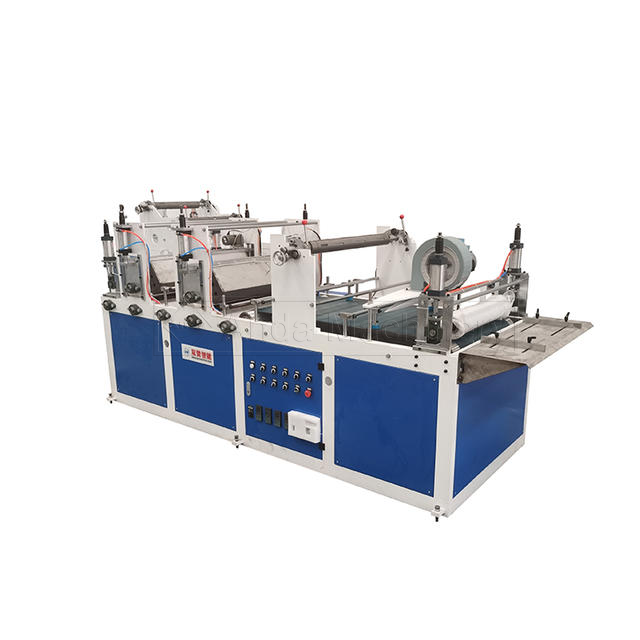
ANDA's PVC Door Board Hot Stamping Machine is designed for decorative transfer applications on compatible door boards and panel materials.
The equipment supports heat and pressure application for transferring decorative patterns onto prepared surfaces.
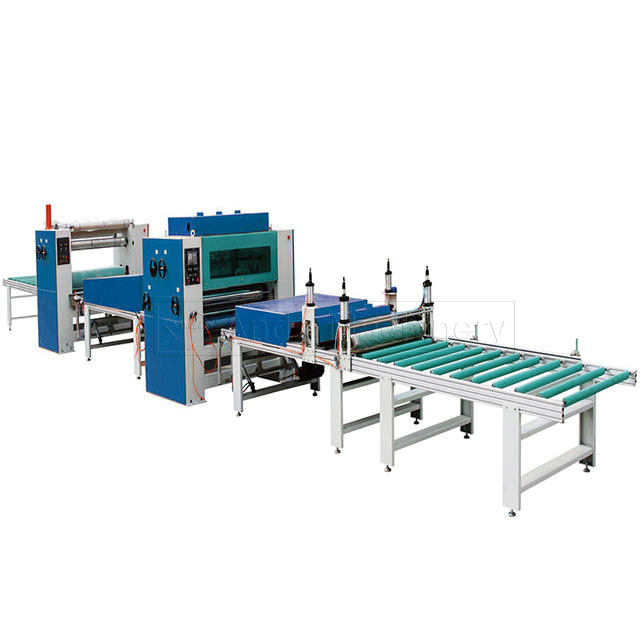
For film lamination applications, ANDA offers a PVC Foam Board Flat PUR Laminating Machine.
The equipment is intended for compatible decorative board and film bonding applications using PUR adhesive systems.
Manufacturers can explore ANDA's Surface Finishing Machine category for additional decorative panel and profile finishing equipment.
Suitable equipment selection depends on substrate dimensions, finishing material, required surface appearance, and production capacity.
Hot stamping transfers decorative layers from a carrier foil using heat and pressure. Lamination bonds a continuous decorative film to the substrate using a compatible bonding system.
Not necessarily. Hot stamping is suitable for selected transferred decorative finishes, while lamination may be preferred for continuous film coverage or textured surfaces. The better option depends on the product requirements.
Durability depends on the foil or film construction, substrate, bonding system, and service conditions. Neither process is universally more durable.
Yes. Compatible PVC panels can be decorated using suitable hot stamping foils and equipment. Processing conditions must remain within the substrate's thermal limits.
PUR lamination can be suitable for compatible WPC boards when the surface preparation, adhesive formulation, and application conditions are appropriate.
Hot stamping foils commonly contain a heat-activated bonding layer, so a separate liquid adhesive application stage is often unnecessary.
Common causes include contaminated surfaces, incompatible adhesive systems, inadequate pressure, and insufficient bond development.
The answer depends on equipment cost, consumables, labor, energy, production volume, maintenance, and finished product yield.
Yes. Compatible hot stamping and lamination equipment can be integrated with panel or profile production systems, depending on substrate condition, production speed, and equipment layout.
Hot stamping and lamination are both effective methods for decorative panel surface finishing, but they use different bonding mechanisms and material constructions.
Hot stamping transfers decorative layers using heat and pressure. Lamination bonds a continuous decorative film to the panel.
For PVC, WPC, MDF, and other compatible decorative materials, the preferred process depends on surface appearance, durability requirements, material compatibility, production efficiency, and operating costs.
Looking for Hot Stamping or Lamination Equipment?
ANDA Machinery provides decorative surface finishing equipment for panel and profile manufacturing.
Contact ANDA Machinery to discuss your substrate materials, decorative finish requirements, panel dimensions, and production capacity.


