 English English
Views: 0 Author: Site Editor Publish Time: 2026-08-10 Origin: Site


The specification of interior and exterior doors carries high stakes in construction and renovation. Choosing the wrong material leads to premature failure, swelling, or compromised aesthetics. Builders, architects, and homeowners must balance the authentic feel of traditional materials against the environmental resilience required in modern, high-moisture, or high-traffic spaces. This guide provides an objective, side-by-side technical evaluation of WPC door boards,solid wood door panels. We analyze their structural properties, lifecycle expenditures, and installation realities to determine the optimal specification for your project. We look at how these materials handle humidity, hardware retention, and daily wear. You will see exactly where each material excels and where it fails. This ensures your next project avoids callbacks and structural defects.

Moisture Resilience: WPC door boards excel in high-moisture environments (bathrooms, basements, coastal areas, balconies) due to their synthetic polymer composition, effectively eliminating rot, swelling, and termite damage.
Structural & Aesthetic Superiority: Solid wood door panels offer unmatched structural rigidity, superior acoustic insulation for bedrooms and offices, and authentic aesthetic value, but require strict climate control to prevent warping.
Lifecycle Expenditures: Long-term resource allocation generally favors WPC over a 10-to-20-year period due to its near-zero maintenance requirements, contrasting sharply with solid wood's ongoing upkeep demands.
Installation Realities: Hardware compatibility differs significantly; WPC requires specific screw retention strategies and reinforced stiles, whereas solid wood provides superior natural grain grip for heavy-duty hinges and locks.
Table of Contents
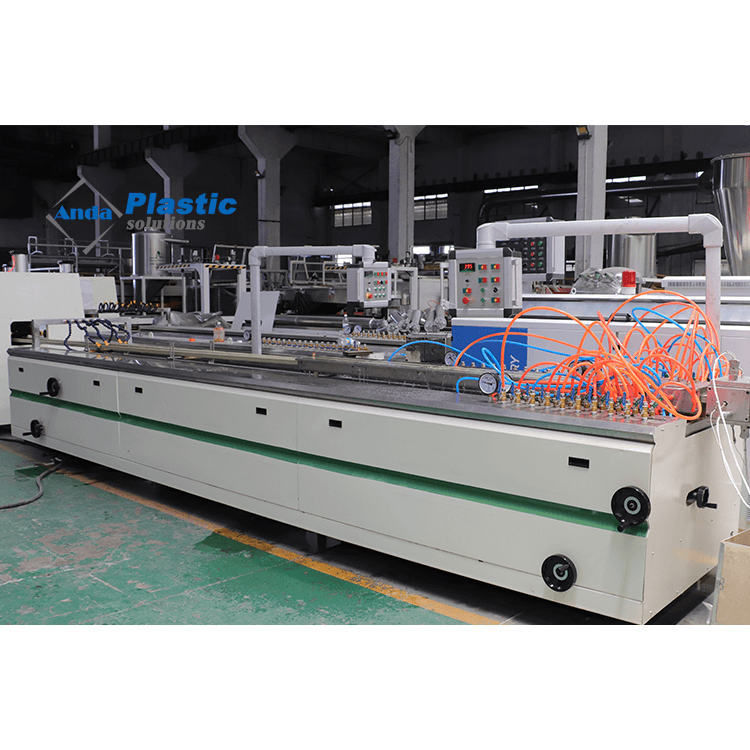
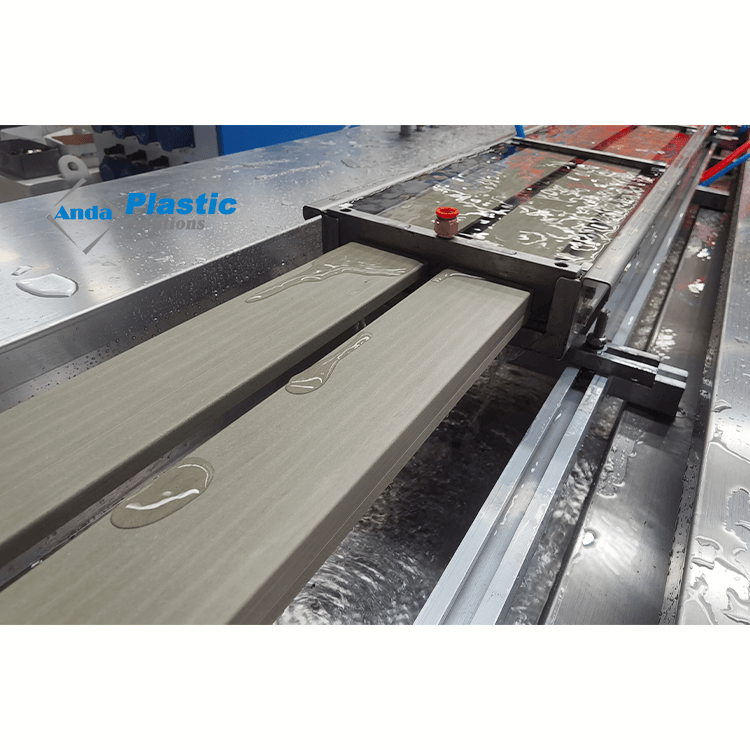
Wood Plastic Composite merges organic wood fibers with synthetic thermoplastics. Manufacturers blend fine wood flour, typically sourced from pine or oak sawdust, with PVC, polyethylene, or polypropylene. Binding agents and UV stabilizers ensure structural cohesion during the heating phase. The extrusion process forces this heated mixture through custom steel dies at high pressure. The material then immediately enters a vacuum calibration table and water cooling tanks to freeze the profile into its final shape.
This engineered approach creates specific internal cellular structures tailored for door applications. Profiles emerge as either hollow-core designs for weight reduction or solid extrusions for maximum density. The manufacturing process guarantees baseline uniformity across every panel. It completely eliminates natural defects like knots, splits, or grain inconsistencies found in raw timber. WPC serves as a highly durable, waterproof upgrade over standard MDF or plywood doors. Builders rely on WPC when project specifications demand absolute dimensional stability under adverse environmental conditions.
Traditional solid wood doors rely on centuries-old milling techniques. Craftsmen build them using stile-and-rail construction or as heavy, continuous slabs. A standard stile-and-rail door consists of vertical stiles, horizontal rails, and floating interior panels. These interior panels must float within the grooves of the frame to allow for seasonal expansion and contraction. Gluing a solid panel directly into the frame will cause the door to split as the wood naturally moves.
Species variations heavily dictate baseline performance. Oak and Walnut provide exceptional density and dent resistance. Pine and Mahogany offer different aesthetic profiles and varying degrees of structural hardness. Kiln-drying processes remain mandatory for solid wood stability. Mills reduce the natural moisture content to a strict 6-8% baseline for interior applications. This controlled drying minimizes future structural shifts. However, wood retains its cellular memory and constantly interacts with ambient environmental conditions. Solid wood requires precise climate control within the building envelope to maintain its structural integrity over decades of use.
WPC exhibits exceptional hydrophobic properties. It boasts a near-zero water absorption rate due to its closed-cell matrix. The plastic polymers completely coat the wood fibers, preventing capillary action. The material originated as a base component in marine and boat manufacturing. This history illustrates its capacity to withstand direct, prolonged water exposure without deforming. WPC panels will not swell, delaminate, or rot when subjected to standing water, heavy steam, or coastal salt spray.
Solid wood is inherently hygroscopic. It absorbs and releases ambient moisture continuously. Exposing solid wood to constant humidity cycling creates severe structural risks. Doors adjacent to unventilated bathrooms or damp basements will experience expansion and contraction. A standard 36-inch wood door can swell by up to 1/8 of an inch during humid summer months. This movement leads to binding in the door frame, warped stiles, and cracked finish layers. The end grains at the top and bottom of the door are highly vulnerable and must be sealed perfectly to prevent moisture wicking.
WPC door boards offer inherent resistance to termites, fungi, and mold. Subterranean and drywood termites digest cellulose to survive. Because the plastic polymers fully encapsulate the organic wood fibers during extrusion, the material becomes unrecognizable and indigestible to biological threats. This synthetic barrier starves pests. Mold spores cannot root into the non-porous surface, making routine sanitization highly effective in damp or tropical climates.
Solid wood door panels carry distinct biological vulnerabilities. Termites and wood-boring insects actively target natural timber. Fungal decay, including white rot and brown rot, accelerates rapidly in high-humidity regions. Builders must apply chemical borate treatments or select naturally resistant wood species like Teak or Cedar to mitigate these risks. Even with treatments, solid wood remains susceptible to biological degradation if the protective sealants fail or if the wood sustains deep scratches that expose the untreated core.
Dense solid wood delivers superior tensile strength. It handles heavy load-bearing requirements effortlessly. Hardwoods resist dents and surface impacts exceptionally well, measured by the Janka hardness scale. When damage does occur, wood offers natural flexibility. Carpenters can easily repair dented or scratched wood surfaces. You can often steam out small dents using a wet rag and a hot iron, which swells the crushed wood fibers back to their original shape.
WPC profiles possess different structural thresholds. They offer high compressive strength but can suffer from brittleness. Extreme temperature fluctuations, particularly freezing conditions, can induce brittleness in some composite blends. High-velocity impacts may crack or shatter rigid WPC surfaces rather than denting them. Unlike wood, you cannot sand out deep scratches on a WPC panel. Damaged WPC often requires complete panel replacement, making impact avoidance critical in high-traffic commercial zones.
Performance Metric | WPC Door Boards | Solid Wood Door Panels |
|---|---|---|
Water Absorption Rate | Near-zero; closed-cell hydrophobic matrix. | High; naturally hygroscopic and prone to swelling. |
Termite Resistance | Inherent; plastic encapsulation prevents attack. | Vulnerable; requires chemical treatments or specific species. |
Impact Repairability | Low; cannot be sanded or steamed. Cracks require replacement. | High; easily sanded, filled, steamed, and refinished. |
Dimensional Stability | Excellent in moisture; may expand slightly in extreme heat. | Poor in fluctuating humidity; prone to warping and binding. |
Acoustic Insulation (STC) | Moderate (25-28 for hollow core). | High (30-35 depending on wood density and thickness). |

WPC maintenance protocols remain minimal. Routine cleaning requires only mild soap and water to remove surface dirt. You should avoid abrasive cleaners or scouring pads, as these will permanently scratch the PVC surface film. WPC faces risks of UV degradation over time if installed in direct sunlight. Manufacturers apply UV inhibitors during extrusion, but prolonged exposure eventually causes chalking and pigment fading. You cannot sand or refinish WPC once the surface fades. The initial finish is permanent.
Solid wood demands a rigorous, ongoing maintenance schedule. Owners must perform periodic sanding, re-staining, and sealing to protect the timber. Film-forming finishes like polyurethane and lacquer inevitably degrade over time. Sunlight, physical wear, and atmospheric moisture strip away these protective layers. As the wood expands and contracts, rigid topcoats often crack at the stile and rail joints. Neglecting this maintenance leads to rapid deterioration, requiring complete surface restoration down to the bare wood.
Initial material acquisition varies significantly between the two options. Standard WPC door boards require a lower initial resource allocation. They provide high utility and rapid installation. Solid wood door panels demand a significantly higher initial investment, reflecting the intensive labor required for raw timber extraction, kiln drying, custom milling, and multi-coat finishing.
Long-term expenditures over a 10-to-20-year lifecycle reveal a stark contrast in labor requirements. Solid wood requires ongoing investments in skilled labor and maintenance materials. Property owners must allocate resources for professional refinishing every three to five years, depending on exposure. Refinishing a single wood door can take four to six hours of labor. WPC operates on an install-and-forget paradigm. The lack of recurring maintenance labor makes WPC highly efficient for long-term project budgeting, offsetting initial material expenditures rapidly.
WPC relies on printed wood grains, PVC films, and laminates. These surface treatments mimic natural timber effectively from a distance. Manufacturers use registered embossing to align the physical texture with the printed grain pattern. However, they often lack true visual depth. Up close, the synthetic repetition of grain patterns becomes apparent. The material feels cooler and harder to the touch than natural wood, which can detract from a high-end interior atmosphere.
Solid wood delivers unmatched visual authenticity. It exhibits chatoyancy, which is the unique way light reflects off the natural wood grain and medullary rays. Wood develops a unique patina over time, adding character to the space. The substantial weight provides premium tactile feedback when operating the door. Solid wood also offers superior acoustic dampening properties due to its dense cellular structure. It serves as a premium architectural focal point for primary living spaces, elevating the overall design language of the building.
WPC door boards face strict customization limits. You cannot easily paint, laminate, or route standard WPC profiles after manufacturing. The synthetic surface resists traditional paints and stains. If you attempt to paint WPC, you must use specialized adhesion promoters and plastics-compatible primers, which often yield mixed results. If a project requires a specific, non-standard color or profile, you must custom-order the WPC panels directly from the factory.
Solid wood door panels offer extensive customization capabilities. Millworkers can execute deep carving, CNC routing, and custom edge profiles on site. Finishers can achieve exact stain matching for historical restorations or luxury builds. Wood adapts to evolving interior design trends through simple refinishing. You can strip a dark walnut stain and apply a light oak finish years after the initial installation, giving the material a second life.
Screw pull-out resistance dictates hardware compatibility. WPC often requires specialized anchors or pilot holes. The internal cellular structure, especially in hollow-core profiles, does not grip standard fine-thread screws effectively. If you miss the solid blocking, the screw strips the thin plastic wall immediately. Manufacturers often integrate factory-reinforced wood or composite stiles to hold heavy hardware securely. Installers must verify these reinforcement zones before drilling for hinges or locksets. Always use coarse-thread screws when fastening into WPC.
Solid wood provides superior natural screw retention. The dense grain grips heavy-duty hinges and locksets firmly without specialized anchors. Installers can easily execute on-site modifications. Carpenters can plane, bevel, or trim solid wood edges to fit out-of-plumb frames perfectly. This workability makes solid wood highly adaptable during complex renovation projects where standard rough opening dimensions do not apply.
Handling and hanging requirements differ based on core construction. Hollow-core WPC door boards offer lighter handling, reducing installer fatigue. However, solid-extruded WPC matches or exceeds the weight of natural hardwood. A solid core WPC or solid wood door can easily weigh between 80 and 120 pounds. Builders must verify the exact weight of the specified panel before installation to ensure the framing can support the load.
Builders must adjust rough opening specifications accordingly. Heavy doors require robust framing, often necessitating double jack studs on the hinge side. You must increase hinge quantities, typically using three or four 4-inch hinges per door. Upgrading to ball-bearing hinges prevents premature wear and metal dust accumulation. Failing to account for material weight leads to sagging frames, uneven gaps, and eventual operational failure.
Verify rough opening dimensions and ensure the floor is perfectly level across the threshold.
Install the frame and plumb the hinge-side jamb using a 78-inch level, securing it with composite shims behind every hinge location.
Pre-drill pilot holes for all hardware to prevent splitting the wood or cracking the WPC stile.
Fasten the hinges using 3-inch coarse-thread screws that penetrate through the jamb and directly into the structural jack stud.
Hang the door panel, check the reveals (gaps) on all sides, and adjust the strike plate for smooth latching.
Bathrooms and Wet Rooms: Complete immunity to steam and splashing water prevents swelling and veneer delamination.
Coastal Properties: Resists salt air degradation and high ambient humidity without requiring constant repainting.
Basements and Cellars: Withstands damp, unventilated environments without developing mold or mildew.
High-Turnover Commercial Facilities: Offers easy sanitization with harsh chemicals and eliminates recurring maintenance labor.
Utility and Laundry Rooms: Provides a durable barrier against fluctuating temperatures and moisture from appliances.
Main Entryways: Provides maximum security and aesthetic impact, provided the door is protected by a proper architectural overhang.
Luxury Residential Interiors: Delivers authentic tactile feedback, visual warmth, and high-end architectural appeal.
Bedrooms and Home Theaters: Maximizes acoustic privacy through dense mass, achieving higher STC ratings.
Historic Renovations: Maintains architectural accuracy and allows for custom period-specific routing and molding profiles.
Executive Offices: Projects authority and allows for exact stain matching with existing wood furniture, wainscoting, and trim.
Environmental exposure, maintenance capacity, and resource allocation strictly dictate the choice between these materials. Default to WPC for wet zones, semi-exterior transitions, and utility areas to mitigate moisture risks. Reserve solid wood for dry, high-visibility areas where aesthetic impact and structural rigidity take priority. Follow these steps to finalize your specification:
Order physical cross-section samples to inspect the core density and verify the thickness of the outer walls.
Measure the ambient humidity levels of your job site using a digital hygrometer before specifying materials.
Verify the structural load capacity of your existing door frames and specify ball-bearing hinges if upgrading to heavier solid panels.
Review the manufacturer's warranty documents regarding UV exposure limits and approved cleaning solvents.
Founded in 2013, Anda has developed into a turnkey supplier of PVC extrusion and plastic processing machinery, providing factory planning, installation, commissioning, and training services for customers worldwide. Its manufacturing portfolio includes PVC and WPC door board machinery as well as WPC production lines, supporting manufacturers seeking integrated solutions for door board and other plastic extrusion applications.
A: Yes, WPC door boards are highly waterproof. Their synthetic polymer composition prevents water absorption, making them immune to swelling, warping, or rotting when exposed to direct moisture, standing water, or high humidity.
A: MDF absorbs moisture rapidly, causing irreversible swelling and crumbling if exposed to water. WPC is entirely waterproof, while solid wood offers better structural strength and repairability than MDF, though both wood and MDF require sealing.
A: Yes. Solid wood can be sanded, stained, and painted multiple times throughout its lifespan. This allows you to update the color to match changing interior design trends or repair surface damage easily.
A: WPC doors can fade and chalk over time if exposed to constant, direct UV light. While they resist moisture warping, extreme heat from direct sunlight can cause thermal expansion or slight bowing in certain composite blends.
A: Solid wood generally provides superior sound insulation. The dense, continuous mass of natural hardwood blocks sound transmission more effectively than hollow-core WPC, though solid-extruded WPC performs similarly to wood.
A: Solid wood scratches are easily fixed by sanding, applying wood filler, and refinishing. WPC scratches cannot be sanded out; minor scuffs can be masked with touch-up markers, but deep gouges require complete panel replacement.
A: Standard hardware works, but WPC often requires specialized anchors or coarse-thread screws due to lower pull-out resistance. Ensure the WPC door has factory-reinforced stiles to hold heavy hinges and locks securely without stripping.


