Product Overview:
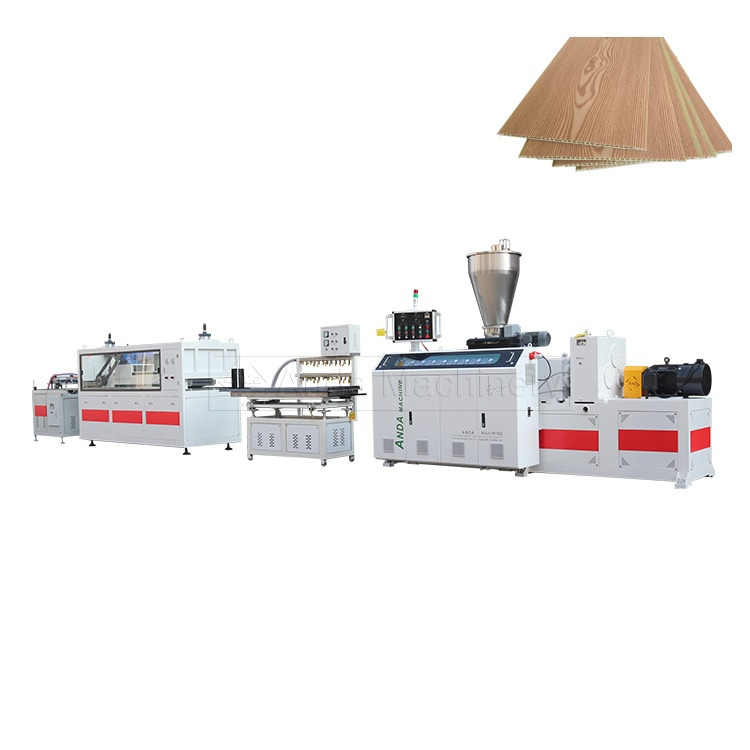
The ANDA PVC Ceiling Panel Extrusion Line is designed for the continuous production of rigid PVC ceiling panels and hollow decorative ceiling profiles.
The complete line integrates PVC plasticization, mould forming, vacuum calibration, water cooling, synchronized haul-off and automatic cutting. Optional hot-stamping or laminating equipment can be added for decorative surface finishing.
Four machine configurations support common panel widths from 200 mm to 600 mm. Reference production capacity ranges from more than 800 m² to 3,300 m² per day, depending on the panel weight, PVC formulation, mould structure and cooling conditions.
| Availability: | |
|---|---|
| Quantity: | |
China
JINSE
Stable PVC ceiling panel production requires accurate control at every stage. Material plasticization, mould flow, vacuum pressure, cooling and traction speed must remain coordinated.
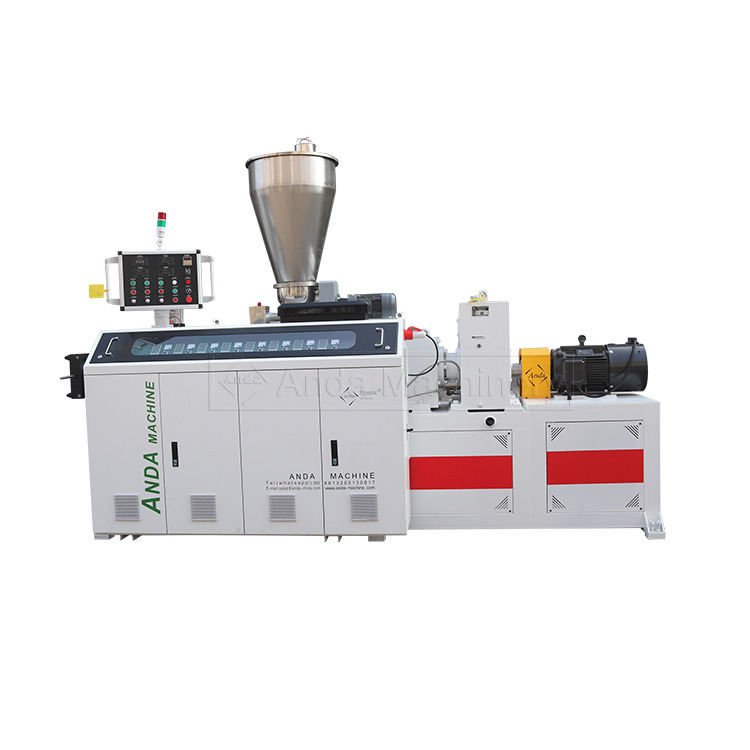
The conical twin-screw unit processes the prepared PVC compound and supplies a stable melt to the ceiling panel mould. The mould creates the panel width, surface and internal hollow structure.
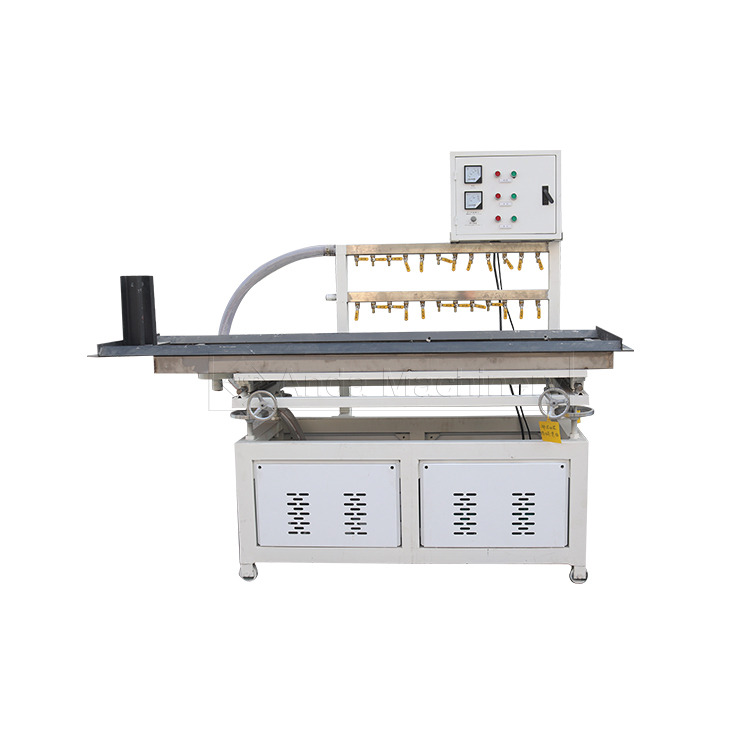
Vacuum calibration and water cooling then stabilize the hot profile. The haul-off unit controls continuous movement before the cutter separates each panel to the required length.
Different ceiling panel widths and designs can be produced by changing the mould and matching calibration tooling within the supported machine range.
Depending on the mould and surface-treatment equipment, the line can produce:
Hollow PVC ceiling panels
Decorative PVC ceiling profiles
Plain white ceiling panels
Direct-colour ceiling panels
Wood-grain ceiling panels
Marble-look ceiling panels
Hot-stamped ceiling panels
Laminated ceiling panels
Common widths include 200 mm, 250 mm, 300 mm, 400 mm, 500 mm and 600 mm.
Other panel dimensions should be confirmed according to the mould, extruder capacity and downstream equipment.
The conical twin-screw unit feeds, compresses and plasticizes the prepared PVC compound.
Independent barrel heating zones allow operators to adjust the temperature profile according to the material formulation. PID control helps reduce temperature fluctuation during continuous production.
The screw speed can be adjusted to match the mould resistance, required output and downstream speed.
The mould determines the panel width, wall thickness, surface profile and internal rib structure.
Balanced melt distribution is important for preventing thin edges, incomplete ribs and uneven surfaces. Each ceiling panel design requires a corresponding mould and calibration tool.
The hot PVC ceiling profile enters the calibration system immediately after leaving the mould.
Vacuum pressure holds the material against the calibrator. Water cooling then stabilizes the shape and removes heat.
The calibration section controls:
Panel width
Surface flatness
Internal rib formation
Edge straightness
Cooling shrinkage
Dimensional stability
The calibration table should be aligned accurately with the mould and haul-off unit.
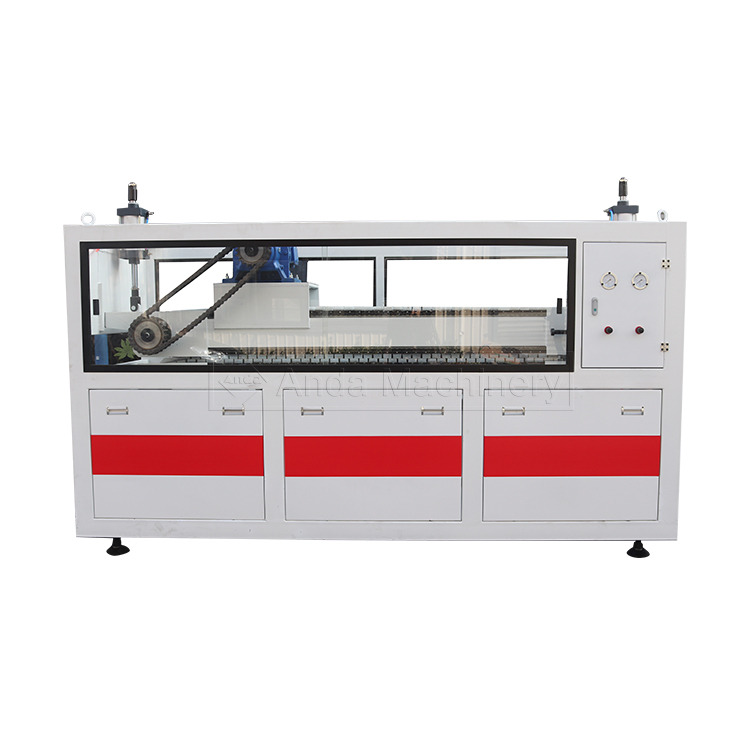
The haul-off unit pulls the cooled ceiling panel through the production line.
Variable-speed control allows the traction speed to match the extrusion output. Stable synchronization helps reduce stretching, wall-thickness variation and surface marks.
The contact material provides sufficient grip while protecting the hollow ceiling profile against crushing.
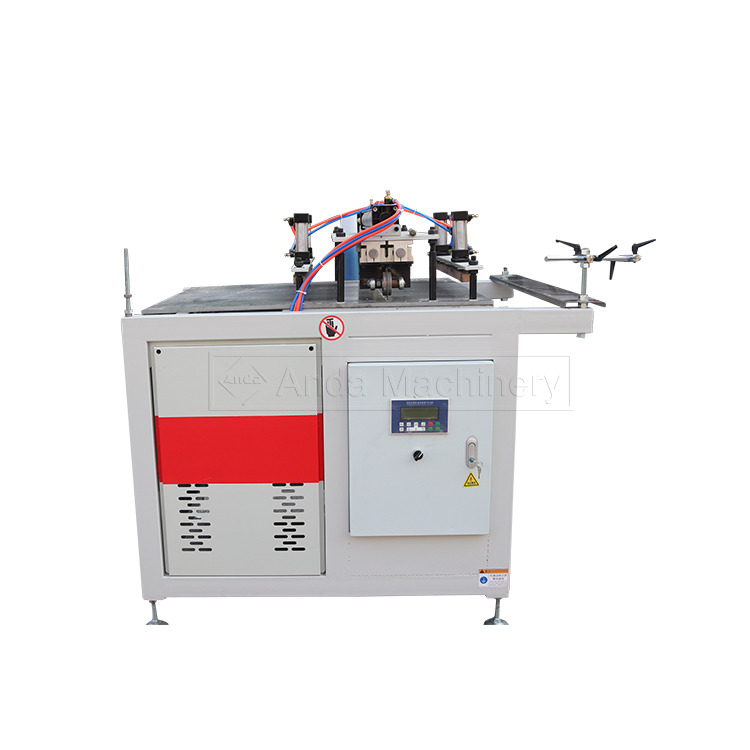
The cutting system follows the production speed and cuts each ceiling panel to the required length.
Cutting timing, blade condition and guide alignment affect the finished length and edge quality. A sensing system can be configured according to the selected machine setup.
The production line can be configured with Siemens motors, ABB frequency inverters, JAC gearboxes and Schneider electrical components.
Component brands and specifications should be confirmed in the final technical proposal. PLC touchscreen control is also available according to the required automation level.
Model | 48/113 super conical | 53/128 commom | 53/128 high speed | 65/132 high speed |
Product width | 200mm,250mm | 200mm,250mm,300mm | 200mm-300mm | 200mm,300mm,400mm,500mm,600mm |
Extruder | SJSZ48/113 | SJSZ53/128 | SJSZ53/128 | SJSZ65/132 |
Capacity per day | >800 m2 | >1200 m2 | >1600 m2 | >3300 m2 |
Please note the output capacity are for reference, it will verify according to the weight of ceiling panel and formula, cooling water and so on. | ||||
Different ceiling panel widths can be produced by changing the mould and matching calibration tooling within the supported equipment range.
The screw system provides controlled feeding, compression and plasticization. This supports stable material flow before mould forming.
Vacuum pressure holds the hot PVC profile against the calibration tooling. This helps maintain its width, hollow structure and surface shape.
Extrusion and haul-off speeds can be adjusted together. Stable speed coordination helps control wall thickness and panel dimensions.
Four machine configurations support different ceiling panel sizes and production targets.
Online hot stamping and separate laminating equipment can be added according to the required decorative finish.
What does a PVC ceiling panel extrusion line produce?
It produces continuous rigid PVC ceiling panels and hollow decorative ceiling profiles. The mould determines the panel width, surface design and internal rib structure.
What ceiling panel widths can the line produce?
The current configurations cover common widths from 200 mm to 600 mm. Each model supports a specific width range shown in the technical table.
Can one line produce different ceiling panel designs?
Yes. Different widths and profile designs can be produced by replacing the mould and matching calibration tooling. The downstream equipment must support the selected width.
What is the daily output?
Reference daily output ranges from above 800 m² to above 3,300 m². Actual capacity depends on panel weight, PVC formulation, mould design and cooling conditions.
Can the line process PVC dry blend directly?
Yes. The conical twin-screw unit is designed to process a prepared PVC dry blend. All ingredients must be mixed uniformly before feeding.
Can decorative patterns be applied online?
Yes. An optional online hot-stamping unit can apply decorative foil patterns. Separate laminating equipment can also be added.
How is ceiling panel flatness controlled?
Flatness depends on balanced mould flow, stable vacuum pressure, uniform water cooling and synchronized haul-off speed.
How do I select the correct extruder model?
Selection depends on panel width, panel weight, formulation and required output. These details should be reviewed together before confirming the model.
Can the electrical system match different voltage requirements?
The required voltage and frequency should be provided during technical confirmation. The final electrical configuration will be listed in the technical proposal.
What information is required for a quotation?
Please provide the panel drawing, width, thickness, weight, raw-material formulation, output target, surface finish and electrical requirements.
Product Overview:
The ANDA PVC Ceiling Panel Extrusion Line is designed for the continuous production of rigid PVC ceiling panels and hollow decorative ceiling profiles.
The complete line integrates PVC plasticization, mould forming, vacuum calibration, water cooling, synchronized haul-off and automatic cutting. Optional hot-stamping or laminating equipment can be added for decorative surface finishing.
Four machine configurations support common panel widths from 200 mm to 600 mm. Reference production capacity ranges from more than 800 m² to 3,300 m² per day, depending on the panel weight, PVC formulation, mould structure and cooling conditions.